
Many people today try to make healthier food choices. They eat more fruits and vegetables, reduce their intake of processed foods, and become increasingly aware of the connection between nutrition and long-term wellness.
Yet despite these efforts, many adults still experience ongoing fatigue, low energy, poor recovery, weakened resilience, and concerns about healthy aging.
One possible reason may lie beneath the surface — literally.
Over the past several decades, growing attention has been paid to the changing condition of agricultural soil and its potential effects on the nutritional quality of modern food. While today’s food supply is more abundant than ever, some researchers and health professionals have raised concerns that the mineral and nutrient content of produce may not be what it once was.
This topic is sometimes referred to as “the modern nutrition gap.”
Understanding this issue may help people make more informed decisions about nutrition, healthy aging, lifestyle habits, and long-term wellness support.
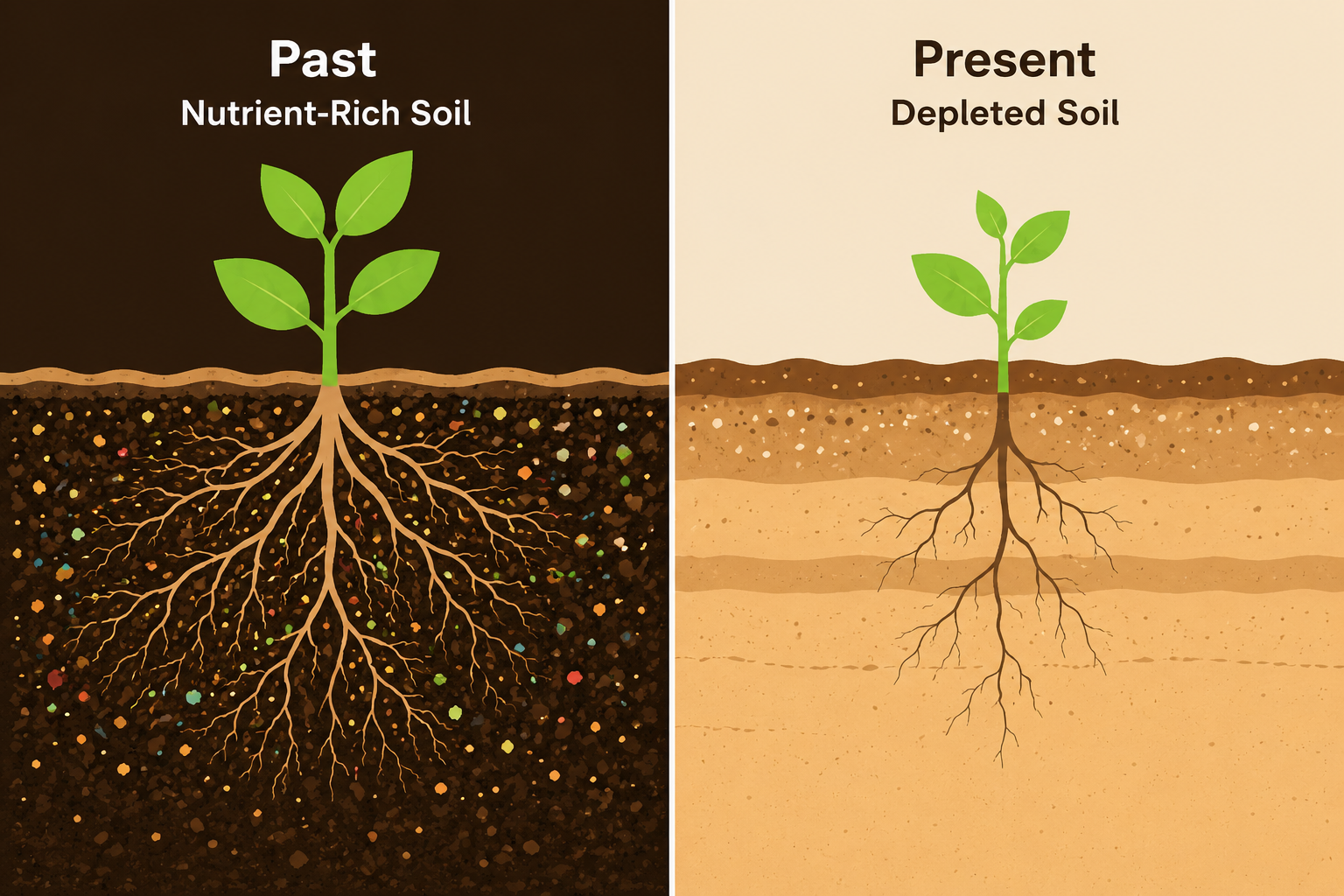
How Soil Quality Can Influence Nutritional Value
What Is Soil Depletion?
Healthy soil is far more than dirt.
Naturally healthy soil contains a complex ecosystem of minerals, microorganisms, organic matter, fungi, and nutrients that support plant growth and nutrient development.
Over time, however, modern agricultural practices have changed how food is produced. Large-scale farming, repeated cropping, synthetic fertilizers, and intensive land use may gradually reduce certain minerals and biological activity in the soil.
While modern agriculture has dramatically increased food production worldwide, some researchers believe these practices may also contribute to lower concentrations of certain nutrients in crops.
This does not mean modern fruits and vegetables are unhealthy. Far from it.
Fresh produce remains one of the foundations of a healthy lifestyle.
However, it does raise an important question:
Are we receiving the same nutritional density from food today that previous generations once received?
What Research Has Suggested
Several studies over the years have explored changes in nutrient levels within commonly consumed fruits and vegetables.
Research published by the University of Texas compared historical USDA nutrient data and found measurable declines in certain nutrients between 1950 and 1999 in some crops.
Among the nutrients discussed in various studies are the following:
- Magnesium
- Zinc
- Iron
- Calcium
- Selenium
- Vitamin C
- Certain B vitamins
The reasons behind these changes are likely complex and may involve:
- Agricultural methods
- Crop breeding for yield and shelf life
- Soil quality
- Food storage and transportation
- Environmental conditions
While experts continue to debate the degree and significance of these changes, the broader discussion has encouraged many people to become more aware of overall nutrient intake and long-term dietary patterns.
Why This May Matter More After 50
As people age, nutritional needs and absorption patterns may gradually change.
Many adults over 50 begin noticing changes in:
- Energy levels
- Muscle maintenance
- Recovery
- Circulation
- Stress resilience
- Sleep quality
- Digestive efficiency
At the same time, nutrient absorption may become less efficient with age.
Factors such as reduced stomach acid, medications, digestive changes, stress, and lifestyle habits can all influence how effectively nutrients are absorbed and utilized by the body.
This means that even people who eat a healthy, balanced diet may benefit from becoming more aware of…
- nutrient density
- overall dietary quality
- lifestyle patterns
- healthy aging habits
- possible nutritional gaps
Awareness earlier in life may be especially valuable.
Healthy aging is often shaped less by short-term interventions and more by consistent habits practiced over many years.
The Modern Nutrition Gap
The term “modern nutrition gap” refers to the possibility that many people may not be obtaining optimal levels of nutrients from food alone.
Modern lifestyles can contribute additional challenges, including:
- Highly processed foods
- Chronic stress
- Reduced physical activity
- Poor sleep
- Excess sugar intake
- Environmental stressors
- Fast-paced eating habits
Together, these factors may affect:
- inflammation balance
- metabolic health
- energy production
- vascular health
- overall wellness
This does not mean people should become fearful or overwhelmed.
Rather, it highlights the importance of becoming more intentional and informed about long-term health habits.
Supportive Strategies for Long-Term Wellness
There is no single “magic solution” for healthy aging or optimal wellness.
However, many health professionals encourage a balanced, sustainable approach focused on supporting the body over time.
Helpful foundational strategies may include:
- Eating a nutrient-rich, whole-food diet
- Including colorful vegetables and fruits
- Prioritizing fiber-rich foods
- Staying physically active
- Supporting healthy sleep patterns
- Managing stress levels
- Avoiding smoking
- Reducing highly processed foods
- Maintaining regular medical checkups
Many people also explore targeted nutritional supplementation as an additional supportive measure.
A Balanced Perspective on Supplementation
Supplements are not intended to replace healthy eating habits.
However, some individuals choose to use carefully selected supplements to help support nutritional intake, particularly when dietary quality, absorption concerns, or lifestyle factors may create gaps.
Areas commonly discussed in relation to healthy aging and wellness support include:
- Magnesium
- Omega-3 fatty acids
- Vitamin D
- Trace minerals
- Antioxidant-rich plant compounds
- Whole-food nutritional blends
When considering supplements, quality matters.
Many people look for products that emphasize:
- ingredient quality
- transparency
- bioavailability
- third-party testing
- balanced formulations
A thoughtful and informed approach is generally more valuable than chasing quick fixes or exaggerated claims.
Final Thoughts
The discussion surrounding soil depletion and modern nutrition continues to evolve, but it has encouraged many people to think more deeply about long-term wellness and the importance of nutritional awareness.
Healthy aging is rarely the result of one dramatic decision.
More often, it is shaped by small daily choices repeated consistently over many years.
Understanding how modern food quality, lifestyle habits, nutrient intake, and aging may interact can help people become more proactive about supporting their health earlier rather than later.
The goal is not perfection, but greater awareness, wiser choices, and a balanced approach to long-term wellness.
It is greater awareness, wiser choices, and a balanced approach to long-term wellness.
In Conclusion
As interest in nutrient quality and healthy aging continues to grow, many people are exploring practical ways to support long-term wellness through balanced nutrition, healthy lifestyle habits, and carefully selected supplements.
The most valuable approach is often one rooted in awareness, consistency, and informed decision-making rather than quick fixes or exaggerated promises.
Key Takeaways
✓ Healthy soil is the foundation of nutritious food. Changes in agricultural practices may influence the nutrient content of some crops, although the extent varies and continues to be studied.
✓ Fresh fruits and vegetables remain essential for good health and should continue to form the foundation of a balanced diet.
✓ Healthy aging involves more than diet alone. Nutrient absorption, lifestyle habits, stress, sleep, and physical activity all contribute to long-term wellness.
✓ Small, consistent choices matter. Building healthy habits over time is generally more beneficial than relying on quick fixes or dramatic interventions.
✓ The goal is awareness, not perfection. Understanding how modern nutrition, lifestyle, and aging interact can help you make informed decisions that support lifelong health.
References & Further Reading
- University of Texas research examining historical nutrient changes in crops
- USDA Food Composition Databases
- British Food Journal research on long-term mineral trends
- National Institutes of Health (NIH) nutrition resources
Continue your healthy aging journey by reading:
How Aging Affects Nutrient Absorption