
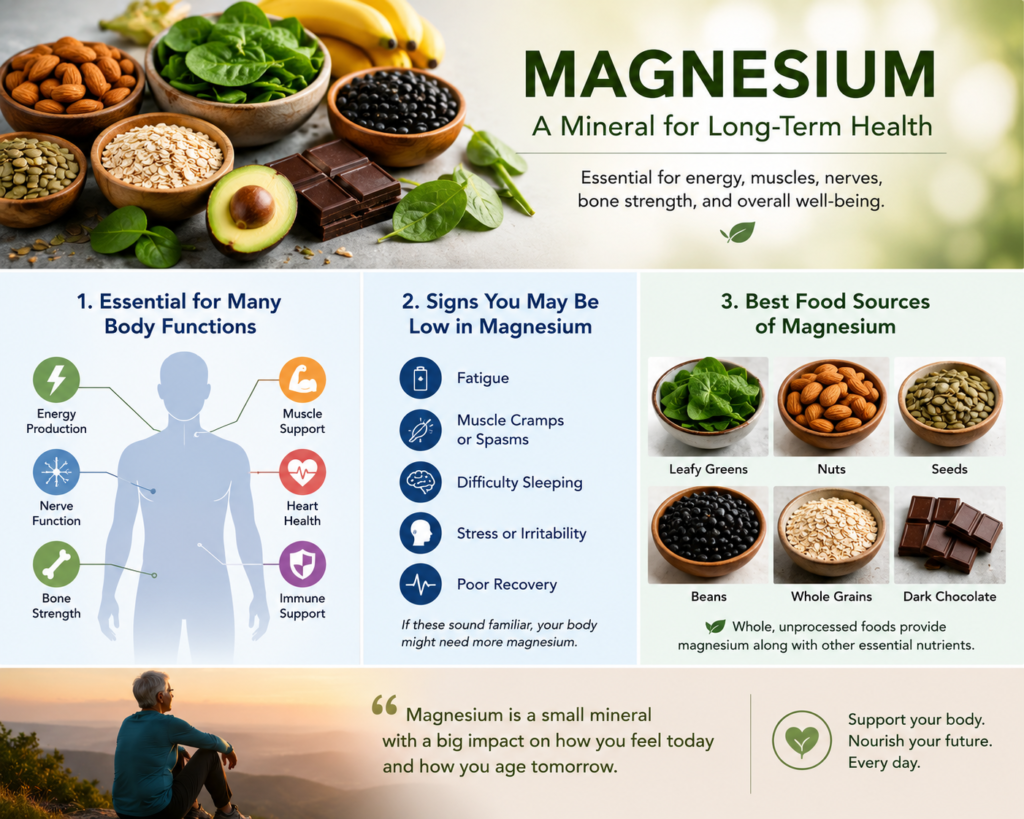
Infographic showing magnesium-rich foods and magnesium’s role in energy production, muscles, nerves, bone health, and overall wellness.
Introduction
Many people focus on vitamins and healthy eating while paying less attention to minerals.
Yet magnesium is one of the body’s essential nutrients and participates in hundreds of biological processes every day.
It supports functions related to:
- energy production
- muscle function
- nervous system activity
- bone health
- sleep regulation
- cardiovascular wellness
As we grow older, understanding nutrients such as magnesium may become increasingly important because changes in digestion, food quality, and nutrient absorption can gradually influence long-term health.
What Does Magnesium Do?
Magnesium contributes to many functions throughout the body.
Researchers continue to study its role in supporting:
- normal muscle contraction and relaxation
- nervous system signaling
- energy production
- bone maintenance
- healthy heart function
- sleep and stress regulation
Rather than acting in one isolated area, magnesium participates in many interconnected processes.
Why Some People May Not Get Enough Magnesium
Even people who make a genuine effort to eat well may not always consume or absorb optimal amounts of magnesium.
Several factors may contribute:
Modern Diet Patterns
Many diets now include larger amounts of processed foods that may be lower in important nutrients.
Food Quality Considerations
Changes in farming practices and food production have generated growing discussion around nutrient density and soil quality.
For a broader discussion:
How Soil Depletion May Affect Modern Nutrition
Nutrient Absorption Changes
Factors such as:
- digestive health
- aging
- stress
- medications
- lifestyle habits
may influence how effectively nutrients are utilized.
Possible Signs Associated With Low Magnesium
Many symptoms can have multiple causes and should never be used for self-diagnosis.
However, magnesium is often discussed in relation to the following:
- muscle cramps
- fatigue
- reduced energy
- sleep difficulties
- stress response
- recovery after physical activity
Food Sources of Magnesium
Whole foods remain an important foundation for nutrition.
Foods commonly associated with magnesium include:
- leafy greens
- nuts
- seeds
- legumes
- whole grains
- avocados
Nutrition often works best when viewed as a long-term pattern rather than isolated nutrients.
Where Supplements May Fit
Some individuals also explore nutritional supplements as a supportive measure when dietary intake, lifestyle patterns, or absorption concerns may create nutritional gaps.
When evaluating supplements, many people consider the following:
- ingredient quality
- formulation
- bioavailability
- manufacturing standards
- transparency
One option that I personally explored is the following:
[https://www.herballyorganic.com/livegood-ultra-magnesium-complex/
Final Thoughts
Magnesium is only one part of a much larger wellness picture.
Healthy aging is often influenced by many smaller factors working together over time:
- nutrition
- movement
- sleep
- stress management
- awareness
The goal is not perfection.
It is becoming informed enough to ask better questions and make thoughtful decisions over time.
About the Author
Frank Wallenhoffer created HerballyOrganic to help people better understand healthy aging, nutrition, nutrient awareness, and long-term wellness in a modern world. Through ongoing research and practical exploration, HerballyOrganic encourages informed questions and thoughtful health decisions earlier rather than later.
References & Further Reading
- National Institutes of Health (NIH) — Magnesium Fact Sheet
- National Institute on Aging — Healthy Eating and Aging
- PubMed magnesium research
- USDA nutrition resources