
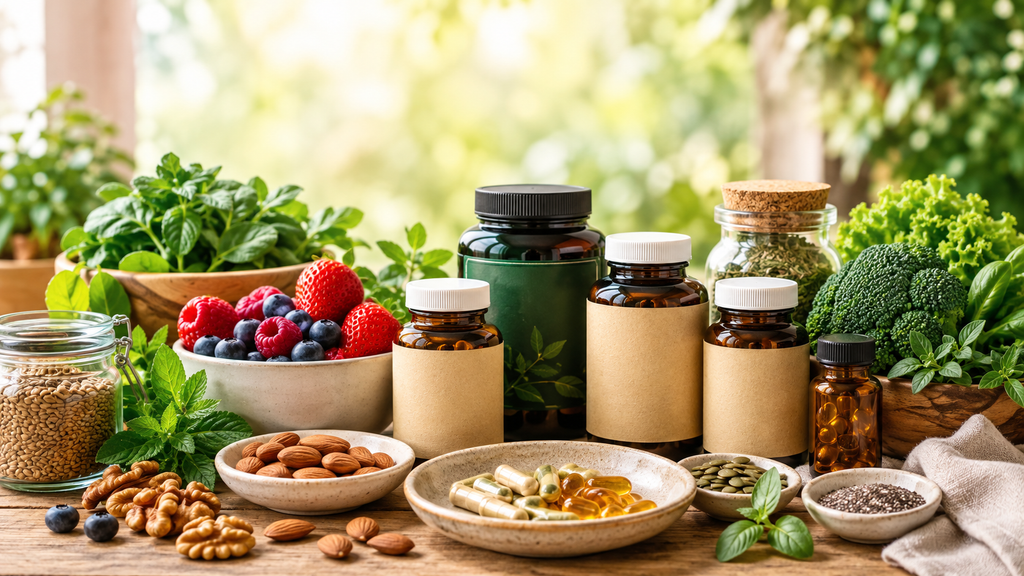
Editor’s Overview
Supplements occupy an unusual place in modern health. Some can be genuinely useful when there is an identified nutritional need, an increased risk of deficiency, or another evidence-supported reason for taking them. Others are promoted with claims that go well beyond what the evidence can support.
The important question, therefore, is not simply whether supplements are “good” or “bad.”
A better question is: When might a supplement be useful—and how can we tell?
A symptom does not automatically tell us which nutrient—if any—is involved. Nor does reading that a particular nutrient is associated with a symptom establish that taking more of it will solve the problem.
A more useful approach is:
Notice → Ask → Investigate → Understand → Act → Review
Sometimes that process may identify a nutritional deficiency for which supplementation is appropriate. Sometimes food or lifestyle changes may be sufficient. Sometimes further medical investigation may be needed. And sometimes there may be no reason to take a supplement at all.
The HerballyOrganic approach is therefore to begin with the person and the question—not the product.
The supplement comes after the question and the evidence—not before them.
1. When Might a Supplement Actually Be Useful?
Supplements can have a legitimate place in health care and nutrition. But their usefulness depends on why they are being taken.
There are circumstances in which supplementation may be appropriate—for example, when a nutrient deficiency has been identified, when dietary intake is inadequate, when absorption is impaired, or when age, medication use, a health condition, or another circumstance increases nutritional requirements or the risk of deficiency.
The important distinction is between taking a supplement because there is a reason and taking one simply because a product promises better health.
Consider two very different approaches:
Product-first thinking:
“I have tingling in my feet. Which supplement should I buy?”
Question-first thinking:
“I have tingling in my feet. What might be causing it, and what information would help us find out?”
The second question leaves open many possibilities. A nutritional deficiency may be involved—but so might medication effects, circulation, nerve problems, metabolic conditions, or other causes that require proper assessment.
This is why symptoms alone should not be used to diagnose a nutrient deficiency.
When testing, medical assessment, dietary evaluation, or other evidence identifies a genuine nutritional need, supplementation may then become a reasonable part of the response.
The question is not: “Which supplement should I take?”
The better question is: “Is there a reason for me to take one?”
A Personal Example: When a Supplement Had a Reason
Recently, during a routine visit to my GP, I mentioned that I had been experiencing tingling in my feet and an unusual sensation that they felt cold, even though they were actually warm.
Rather than trying to diagnose the symptom myself, I raised it with my doctor.
He reviewed my recent blood-test results and pointed out that my vitamin D level was low. I subsequently began taking vitamin D and noticed a marked improvement in how my feet felt.
That observation was meaningful to me, but it is important to distinguish personal experience from proof of cause and effect.
My experience does not establish that low vitamin D caused those symptoms, nor does it mean that someone experiencing tingling or unusual sensations in their feet should automatically take vitamin D. Such symptoms can have many possible causes and may warrant medical assessment.
What the experience does illustrate is a useful way of thinking:
Problem noticed → Professional assessment → Relevant evidence → Identified need → Appropriate response → Review
The supplement did not come first.
The question and the evidence came first.
That distinction is central to the HerballyOrganic approach. Supplements can be valuable when there is a sound reason for using them. But symptoms should not become advertisements for products, and supplements should not become substitutes for understanding what may actually be happening.
2. “Organic” and “Natural”: What Do These Labels Actually Tell Us?
Words such as “organic,” “natural,” “clean,” and “whole-food based” can strongly influence how a supplement is perceived.
But these terms do not all mean the same thing—and none of them, by themselves, establishes that a supplement is necessary, safer, better absorbed, or more effective.
Organic generally refers to standards governing how particular agricultural ingredients are produced and processed. Where an organic certification applies, it can provide useful information about production methods and sourcing.
But organic certification is not evidence that the finished supplement will produce a greater health benefit.
The word “natural” requires even more caution. A substance can occur naturally and still have biological effects, side effects, or interactions with medicines. Natural origin does not automatically mean harmless.
Similarly, marketing expressions such as “clean ingredients,” “premium,” “superfood,” or “whole-food based” may sound reassuring, but they should not replace more important questions:
- What does the product actually contain?
- Is there good evidence for the ingredient and intended use?
- Is the dose appropriate?
- Has the product been independently tested for quality and contaminants?
- Could it interact with medicines or other supplements?
- Most importantly, is there a sound reason for taking it?
The HerballyOrganic View
Organic does not automatically mean better. Natural does not automatically mean safe. And an impressive label does not establish a health benefit.
Quality and sourcing can matter—but they come after the more fundamental questions of need, evidence, safety, and appropriate use.
3. Why Might Supplements Become Relevant as We Grow Older?
Nutritional Needs Can Change Over Time
As we grow older, maintaining good nutrition can sometimes become more complicated. The issue is not simply how much food we eat, but whether our diet provides what we need—and whether our bodies are able to absorb and use those nutrients effectively.
Several factors may influence this, including:
- changes in appetite or food intake
- changes in digestion or nutrient absorption
- medications that may affect particular nutrients
- health conditions that influence nutritional status
- reduced exposure to sunlight in the case of vitamin D
- dietary restrictions or changes in eating habits
None of these automatically means that a supplement is needed.
They are reasons to ask a better question: Is there evidence that something is actually missing?
Diet Is Part of the Picture—But Not the Whole Picture
What we eat remains one of the most important influences on nutritional status. A varied, nutrient-rich diet can provide most people with a strong nutritional foundation.
But diet is only one part of the picture.
Nutrient status can also be influenced by how much we eat, the variety of foods we choose, how well nutrients are absorbed, medications, health conditions, lifestyle factors, and individual nutritional requirements.
This means that two people eating apparently similar diets may not necessarily have the same nutritional status.
The important question is not simply, “Am I eating well?” but also, “Is my body actually getting what it needs?”
A Possible Nutritional Gap Is Not the Same as a Proven Deficiency
Discussions about nutrient density, food quality, soil health and nutrient absorption can raise legitimate questions about whether some people are receiving all the nutrients they need.
But an important distinction must be made:
A possible nutritional gap is not the same as a demonstrated deficiency.
Symptoms such as tiredness, weakness, tingling, changes in appetite or generally feeling unwell can have many possible causes. They should not automatically be interpreted as evidence that a particular vitamin or mineral is lacking.
A more useful approach is to work through the question systematically:
Notice the problem → investigate possible causes → look for evidence → identify an appropriate response → review what happens next.
Sometimes that investigation may include reviewing diet, medications and health history. Sometimes a healthcare professional may recommend a blood test or other assessment. And sometimes the evidence may show that a particular nutrient really does need attention.
In that situation, a supplement has moved from being a product someone might try, to being an intervention with a specific reason for being used.
That distinction lies at the heart of the HerballyOrganic approach to supplements:
Don’t begin by asking, “Which supplement should I take?”
Begin by asking, “Is there evidence that I need one—and if so, why?”
Food Quality Can Matter—But It Does Not Tell Us What an Individual Needs
Questions about soil health, farming practices and the nutrient composition of food are legitimate areas of research.
The nutritional composition of crops can vary according to many factors, including plant variety, growing conditions, soil characteristics, agricultural practices, storage and food preparation.
But even where changes in nutrient composition are identified, this does not tell us that a particular person is deficient—and it does not automatically establish a need for supplementation.
Fruits, vegetables, legumes, nuts, whole grains and other nutrient-rich foods remain important foundations of a healthy diet.
The more useful question for the individual is:
“Given my diet, age, health, medications and other circumstances, is there evidence that my nutritional needs are actually being met?”
That question brings us back to the HerballyOrganic Compass: broader nutritional concerns can help us know what questions to investigate, but individual decisions should follow the evidence available for the individual.
For a fuller examination of this subject, see: How Soil Depletion May Affect Modern Nutrition.
Nutrient Absorption: What We Eat Is Only Part of the Story
Good nutrition begins with what we eat—but eating a nutrient and being able to absorb and use it are not quite the same thing.
Nutritional status can be influenced by several factors, including digestion, absorption, medications, health conditions, dietary patterns and, in some cases, changes associated with aging.
This does not mean that nutrient deficiencies are an inevitable part of growing older, nor does it mean that supplements are automatically necessary.
It does mean that when a nutritional problem is suspected, simply asking “What should I eat more of?” may not always be enough.
We may also need to ask:
- Am I consuming enough of the nutrient?
- Is my body absorbing it effectively?
- Could a medicine or health condition be affecting it?
- Is there a reliable way to assess my nutrient status?
- If a deficiency or increased need is identified, what is the most appropriate response?
Sometimes the answer may involve improving the diet. Sometimes an underlying cause may need attention. Sometimes monitoring may be all that is required.
And sometimes a supplement may have a clear and useful role.
The important point is that the supplement comes after the reason for taking it has been established—not before it.
For a fuller discussion, see: Why You May Not Be Absorbing Nutrients After 50.
4. When Might Supplementation Have a Clear Purpose?
There is no single rule that determines whether someone should take a supplement. The reason matters.
Some circumstances in which supplementation may be worth considering include:
An Identified Deficiency
When reliable testing identifies a deficiency, supplementation may sometimes be recommended to help restore adequate nutrient status.
This is very different from assuming that a symptom proves a deficiency.
Testing or appropriate assessment can turn a possibility into useful information.
Increased Risk of Deficiency
Sometimes a person may have circumstances that increase the likelihood of inadequate nutrient status.
These may include restricted diets, reduced food intake, certain digestive or absorption problems, limited exposure to sunlight in the case of vitamin D, particular health conditions, or medications known to affect specific nutrients.
In these situations, the appropriate response may involve dietary changes, monitoring, testing, supplementation—or a combination of these—depending on the individual circumstances.
When Diet Alone Cannot Reliably Meet a Particular Need
Food should remain the nutritional foundation wherever practical.
But there are situations in which obtaining enough of a particular nutrient from food alone may be difficult. The appropriate response depends on the nutrient, the person’s circumstances, and the reason the need exists.
Again, the important principle is:
Supplementation should address an identified need—not manufacture one by a sales pitch.
A Specific Evidence-Supported Use
Not every supplement is taken to correct a deficiency. Some nutrients or other supplemental products have been studied for particular purposes.
But evidence for one ingredient, dose, formulation, or health condition should not automatically be extended to every product carrying the same name.
This is particularly important with herbal products, probiotics, omega-3 products and combination formulas, where formulations can differ substantially.
The useful question is not:
“Is this supplement good for you?”
It is:
“What does the evidence show for this particular product or ingredient, at this dose, for this purpose, in someone like me?”
When the Answer May Be “No Supplement Needed”
This possibility deserves equal attention.
If nutritional status is adequate, there is no identified need, and good evidence does not support supplementation for the intended purpose, taking an additional product may provide little or no benefit—and in some circumstances may introduce unnecessary cost, excessive intake, side effects, or interactions.
Good health information should not create treatment where treatment isn’t needed.
That is why the HerballyOrganic Compass must be capable of pointing in either direction:
Supplement appropriate. Supplement unnecessary. More information needed.
5. Before Choosing a Supplement: Ask These Questions First
Before comparing brands, labels, certifications or prices, there is a more important question:
Should I be taking this supplement at all?
A useful decision begins with questions such as:
- What am I trying to achieve or address?
- Is there evidence that I actually need this nutrient or product?
- Could testing or professional assessment provide useful information first?
- Could the underlying issue have another cause?
- Could food reasonably meet the need?
- What evidence supports this particular supplement for this particular purpose?
- What dose has been studied or recommended for that purpose?
- Could it interact with my medicines or other supplements?
- Could too much be harmful?
- How will I know whether it is helping—and when should the decision be reviewed?
Only after those questions have been considered does product quality become the next issue.
When choosing a product, useful considerations may include:
- clear identification of ingredients and amounts
- appropriate dosage information
- reputable manufacturing standards
- independent quality testing where available
- transparency about sourcing and formulation
- unnecessary additives or ingredients
- realistic claims rather than promises of dramatic results
A high-quality supplement that you do not need is still a supplement you do not need.
6. How to Separate Evidence From Marketing
Supplement marketing can make it surprisingly difficult to distinguish evidence from persuasion.
A product may contain a legitimate nutrient, herb or other ingredient—and still be promoted with claims that go far beyond what the evidence supports.
This is one reason claims about a product’s health benefits should be evaluated separately from the product itself.
Be particularly cautious when advertising hype relies on expressions such as:
- “secret formula”
- “miracle cure”
- “guaranteed results”
- “reverses disease naturally”
- “doctors don’t want you to know”
- “clinically proven” without explaining what was actually studied
But exaggerated language is not the only warning sign. More sophisticated marketing may cite genuine scientific research while implying that the research proves much more than it actually does.
A useful question is:
“What exactly did the research show—and does that finding apply to this product, this dose and the claim being made?”
This distinction matters because a small amount of truth can sometimes be used to support a much larger marketing claim.
At HerballyOrganic, we try to separate the two:
What is established? What is promising? What remains uncertain? And what is not currently supported by good evidence?
Wellness rarely depends upon a single product or isolated ingredient. Health reflects many interacting influences—including nutrition, movement, sleep, medical care, medications, genetics, environment and circumstances that vary from one person to another.
A convincing advertisement is not evidence. But neither should marketing hype cause us to dismiss something that genuinely has evidence behind it.
The task is to separate the evidence from the claim.
Related Reading
• How Soil Depletion May Affect Modern Nutrition
• Why You May Not Be Absorbing Nutrients After 50
• Understanding Magnesium and Its Role in Long-Term Health
• What My Stroke Taught Me About Health, Nutrition, and Asking Better Questions
7. Final Thoughts: Let the Reason Come Before the Supplement
Supplements are neither inherently good nor inherently bad. Their value depends on the reason they are being used, the evidence supporting that use, the dose, the individual circumstances, and the quality of the product.
For some people, a supplement may correct an identified deficiency or meet a genuine nutritional need. For others, improving diet or addressing another underlying factor may be more appropriate. And sometimes the evidence may show that no supplement is needed at all.
That is why HerballyOrganic does not begin with the product.
We begin with the question.
Notice → Ask → Investigate → Understand → Act → Review
This approach cannot guarantee that every health question will have a simple answer. Often it will not.
But it can help us distinguish what is known from what is assumed, what is supported from what is marketed, and what may be useful from what may simply be unnecessary.
Supplements should also be considered as only one part of a much larger picture. Nutritious food, movement, sleep, social connection, appropriate medical care and other aspects of everyday life continue to matter.
Nothing works alone.
The goal is not to become suspicious of every supplement—or enthusiastic about every new one.
The goal is to become better equipped to ask:
“Is there a sound reason for me to take this?”
And then allow the evidence to guide the answer.
Your health. Your questions. Your decisions.
Tagged Dietary Supplements, Healthy Aging, Nutrition, Wellness